
The brains of your plant, in safe hands
PLCs run everything in a modern facility — and when the program is wrong, undocumented or locked to a contractor who's moved on, the whole plant is exposed. Mobile Automation's engineers program, upgrade, document and support PLCs across every major platform, and we maintain an extensive library of programming software covering most brands in use today, including legacy systems.
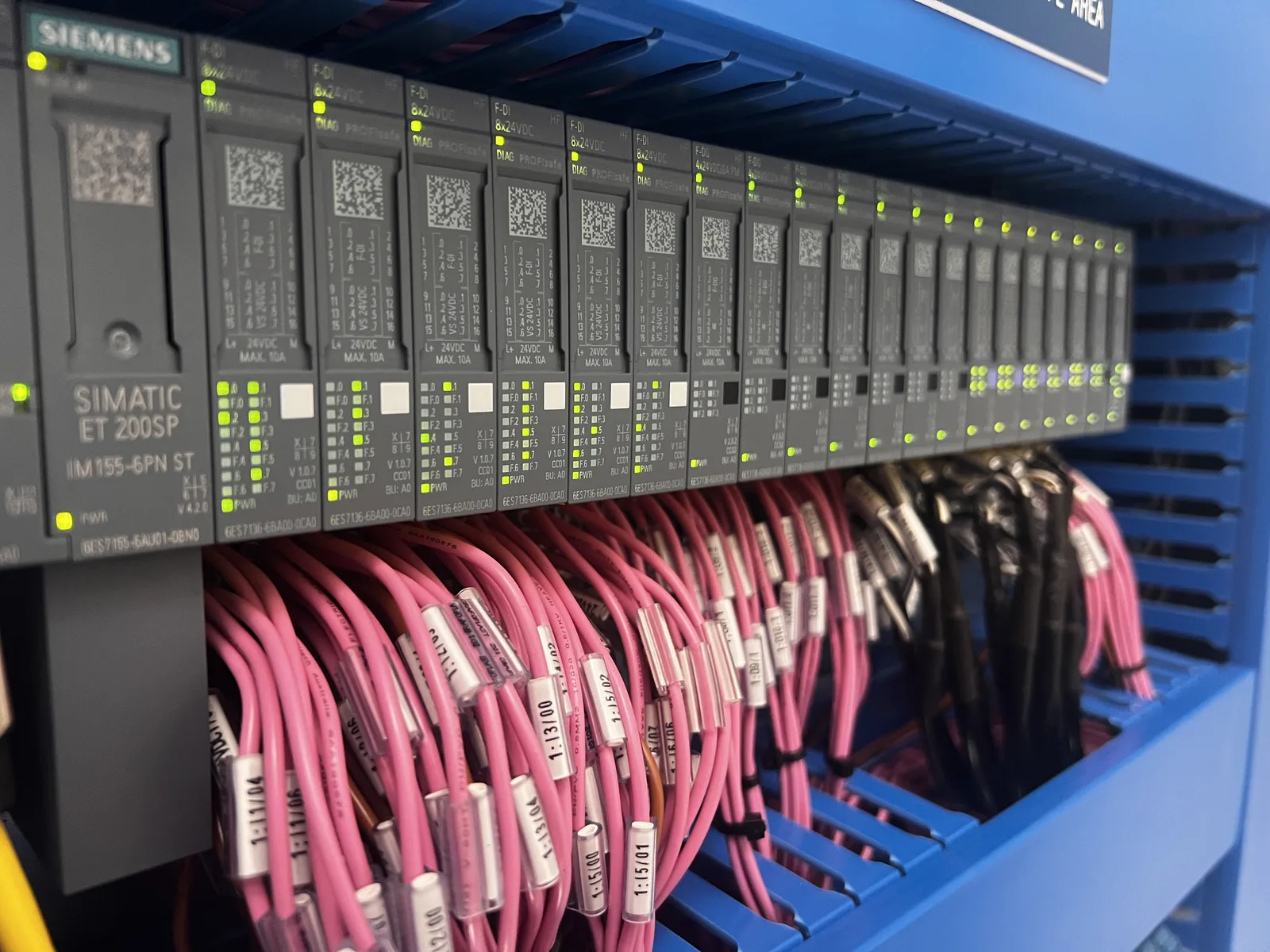
Platforms we program
- Siemens — SIMATIC S7 family and TIA Portal
- Allen-Bradley / Rockwell — CompactLogix and ControlLogix
- Schneider Electric — Modicon
- Mitsubishi Electric — FX and Q series
- Omron — CP1 and NX
- ABB — AC500, plus Keyence, IDEC, B&R, Koyo and Delta
What we do with them
New machine and line programming; modifications and functionality additions; fault-finding and breakdown response; legacy PLC migrations (obsolete platforms onto supported hardware, with the logic properly documented this time); HMI development; and Industry 4.0 work — networking, data collection, remote monitoring and cybersecurity-conscious architecture.
Legacy PLC migration and obsolescence
A PLC becomes a business risk long before it fails. Once the manufacturer stops supporting a platform, spares come off eBay, the programming software won't run on a current operating system, and the only person who understood the logic retired in 2014. Then a card fails on a Friday afternoon.
We migrate obsolete controllers onto supported hardware, including Siemens S5 and early S7 and Allen-Bradley PLC-5 and SLC 500, as well as discontinued HMI and drive platforms. The approach is deliberately unglamorous: back up and archive what's running, document the existing logic properly, rebuild it on current hardware, bench-test against the real I/O list, then cut over inside a planned shutdown window with our own electricians doing the wiring. You come out of it with a supported controller, documented code you actually own, and a spares path that isn't an auction site.
We've done this on live production plant — including the cable extruder line, where a new MCC and modern PLC/HMI replaced the original control system, and the Stramit roll-forming mills, networked and modernised onto Siemens control. If your platform isn't listed above, ask — most obsolete hardware has a sensible migration path.
Programming plus power: the practical advantage
Because we're a Registered Electrical Contractor with 40+ service vehicles, our PLC engineers arrive with electricians behind them. Code changes, I/O wiring, drive parameters and sensor faults get fixed in one visit — not quoted across three contractors. It's also why manufacturers keep us on breakdown coverage: when a line stops, the engineer who responds can resolve the fault — whether it sits in the logic or the wiring.
Frequently asked questions
Our PLC program is undocumented — can you take it over?
Yes, this is one of our most common engagements. We back up, reverse-document and version-control your existing programs, then support them going forward. You end up owning your own code.
Can you migrate an obsolete PLC to a modern platform?
Yes — legacy migrations (e.g. old S5, PLC-5, discontinued platforms) onto current Siemens or Allen-Bradley hardware are a specialty, staged around production windows with wiring handled by our own electricians.
Do you offer PLC breakdown support?
Yes. PLC fault-finding is part of our emergency breakdown service across Melbourne and Victoria.
Which industries do you program for?
Manufacturing, food & beverage, water treatment, mining and quarrying, pharmaceuticals and materials handling — from single machines to plant-wide systems.
Have more questions? Get in touch with our team and we'll be happy to help.