What machine vision does in practice
Machine vision is a camera, a light and a decision. The camera sees the product, the system decides whether it's right, and the line does something about it — rejects, stops, records, or picks it up.
- Presence and absence checking — is the cap on, the seal fitted, the insert present, the carton full
- Dimensional and defect inspection — measuring features, checking fill height, finding cracks, contamination, burrs and surface faults
- Label and print verification — right label, right place, right way up, and the printed date and batch actually legible
- Barcode, Data Matrix and OCR reading — reading codes and human-readable text at line speed for routing and traceability
- Vision-guided robot picking — finding product that isn't presented in a fixed position and telling the robot where it is
- Colour, orientation and sorting — separating variants, correcting orientation, routing product by SKU
Most of these replace a person doing a check that a person is genuinely bad at — a repetitive visual inspection, at speed, for eight hours. Vision doesn't get tired and it doesn't have a bad shift.
Why vision projects fail — and it isn't the software
The single most common reason a vision system underperforms is that nobody solved the lighting and the optics before they started writing inspection logic. If the feature you need to detect isn't clearly and consistently visible in the raw image, no amount of processing will find it reliably. The system will work in the demo and start passing bad product in month three.
The things that actually break vision systems on a factory floor:
- Wrong lighting — a clear defect under backlight can be invisible under a ring light. Choosing between backlight, diffuse dome, low-angle grazing, coaxial and structured lighting is the design decision, and it's usually made by trial on real samples.
- Ambient light — a skylight, a roller door or a shift change in the factory lights alters the image through the day. Vision stations need shrouding and controlled illumination, not just a camera on a bracket.
- Optics and working distance — the wrong lens or focal length gives you insufficient resolution on the feature, or a depth of field that can't cope with product height variation.
- Product presentation — if the product arrives at a different angle, height or position each time, the inspection has to cope with far more variation than anyone described in the brief. Often the right fix is mechanical, not optical.
- Vibration and mounting — a camera on a flimsy bracket bolted to a running conveyor will drift out of alignment and blur images at speed.
- Contamination — flour, oil mist, steam, dust and washdown on the lens or window. Enclosures, air purge and cleaning access need designing in, not adding after the first false reject storm.
- No plan for false rejects — a system tuned so tight that it throws away good product costs more than the problem it solved. Tolerances have to be set against real marginal samples.
Our approach: prove it on your product first
We don't quote a vision system from a specification sheet. We ask for real samples — good ones, marginal ones and the actual defects you're trying to catch — and prove the inspection works on them under representative lighting and speed before anyone commits money.
That trial settles the questions that decide the project: which lighting technique, which camera and lens, what resolution is genuinely needed, how much product variation the inspection can absorb, and what the realistic false reject rate is. Occasionally it tells us the defect can't be seen reliably at all, in which case you've saved the cost of finding that out after installation.
Vision we've delivered
a personal care manufacturer — vision-guided tube picking from cartons using Universal Robots cobots, with a purpose-developed tube-retract motion validated across small, medium and large tubes at speed without collisions, plus an operator-configurable bottle-handling line that needs no robot programmer to change product.
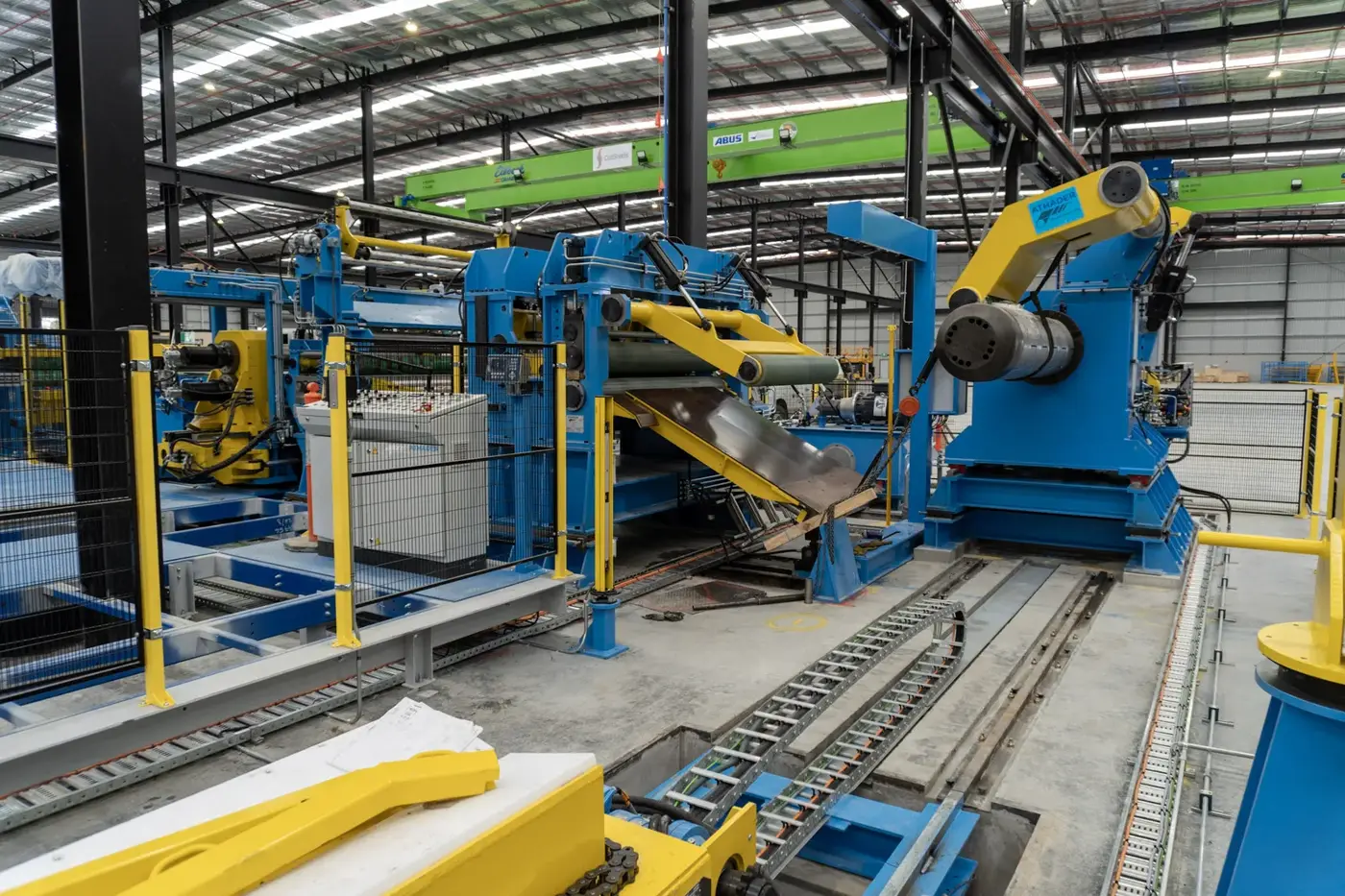
a steel processor — camera installation at the separator bars and scrap baller on high-throughput steel processing lines, with data cabling into the existing recording system, delivered as part of ongoing controls, safety and reliability upgrades across the slitting, shear and packing lines.
Integration is the rest of the job
A vision system that can't tell the line what it found is a very expensive camera. The integration work is where a vision project becomes useful:
- PLC handshaking — trigger, result and reject timing built into the machine logic, so the right product gets rejected at the right point. We do the PLC programming ourselves.
- Robot guidance — coordinate transforms and calibration between camera and robot, so a detected position becomes an accurate pick. See robotic solutions and pick and place.
- Traceability data — results, measured values, read codes and reject images logged to SCADA, a database or your MES or ERP, so an inspection becomes an auditable record.
- Operator interface — screens that show why something was rejected, in language a line operator can act on, plus controlled access to change a tolerance.
- Reject mechanisms and mounting — pushers, air blasts, diverts, frames and enclosures designed and fabricated in our own workshop.
One team, from the light to the line
Most vision suppliers sell you hardware and a day of application support. Someone else mounts it, someone else wires it, and someone else has to make your PLC do something with the result — and when it doesn't work, the discussion is about whose fault it is.
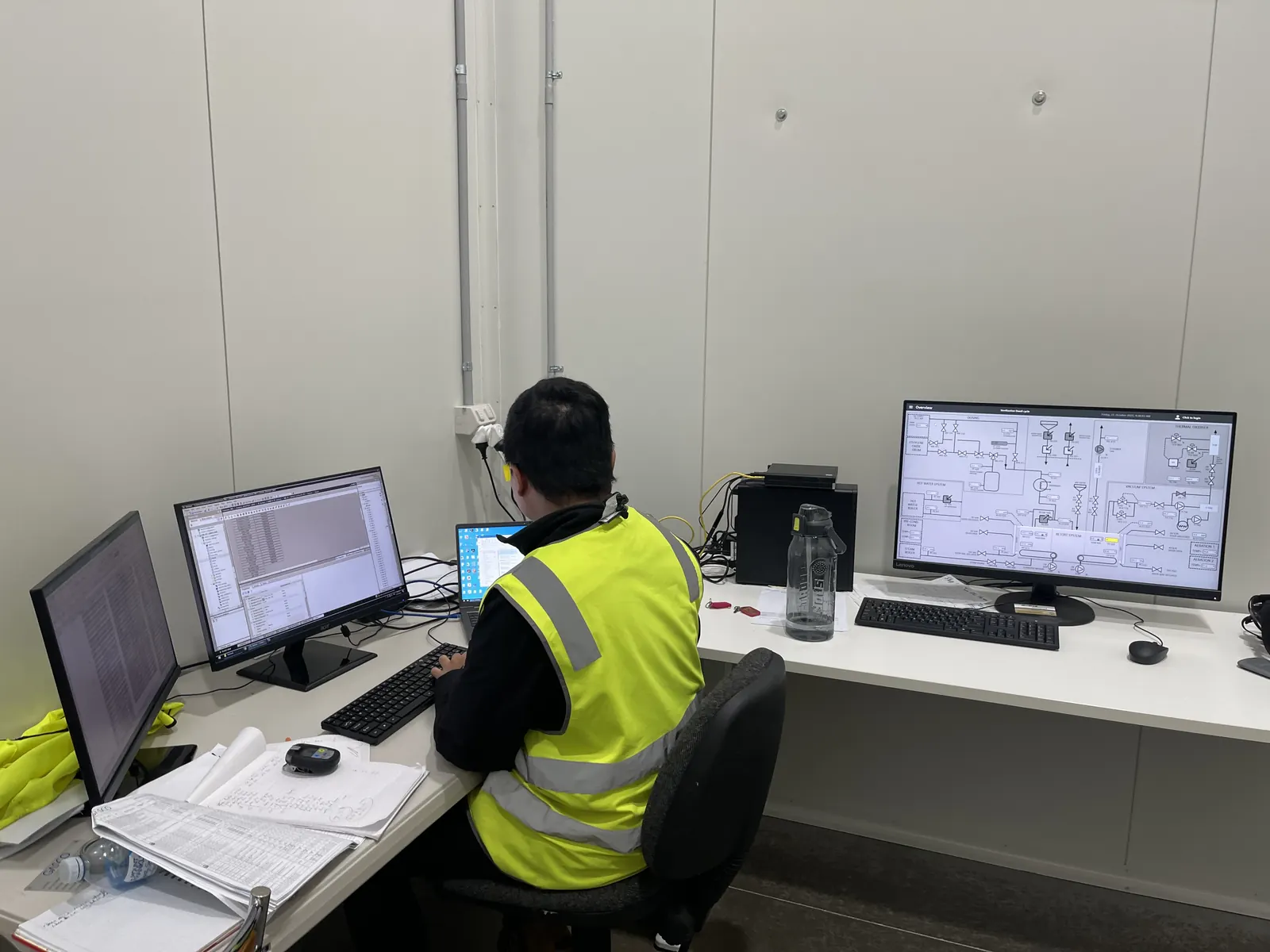
We design the vision, fabricate the mounting, run the power and cabling under our own licence, program the PLC and the robot, build the reporting and support the whole thing afterwards. If the right answer turns out to be a better sensor, a mechanical change to product presentation, or an automation upgrade rather than a camera, we'll say so. Talk it through with our engineering consultation team.
Frequently asked questions
Will vision work on our product?
That's exactly the question we answer before quoting. We ask for real samples — including the marginal and defective ones — and prove the inspection on your actual product under representative lighting and speed. If the defect can't be seen reliably, we'll tell you that rather than sell you a camera and hope.
Why do vision projects fail?
Almost always lighting and optics, not software. If the feature isn't clearly visible in the raw image, no amount of processing will find it repeatably. The other common causes are vibration, product presentation that varies more than anyone admitted, lens and window contamination, and ambient light from a skylight or a roller door changing the image through the day.
Can vision guide one of our robots?
Yes. Vision-guided picking lets a robot find product that isn't presented in a fixed position — parts in a carton, product on a moving belt, or items in random orientation. We delivered vision-guided tube picking on Universal Robots cobots for a personal care manufacturer, validated across small, medium and large tubes.
Can the vision system feed our traceability or quality records?
Yes. Pass and fail results, measured values, read codes and reject images can be time-stamped and logged to a SCADA system, a database or your MES or ERP. That turns an inspection into an auditable quality record, which matters in food, pharmaceutical and automotive supply.
Do you supply the whole system or just the camera?
The whole system. Camera, lens, lighting and enclosure selection; the mounting bracket or frame fabricated in our workshop; the power and cabling under our licence; the PLC and robot integration; the reject mechanism; and the operator screens and reporting. One contractor, one point of accountability.
Have more questions? Get in touch with our team and we'll be happy to help.