The handover problem
Conveyor projects usually involve at least three parties: someone to build the steel, someone to wire it, and someone to make it talk to the rest of the line. The gaps between them are where the budget and the timeline go — the frame arrives with no allowance for the cable tray, the drive is specified before anyone checks the available supply, the guarding fouls the access the maintenance team needs.
We do all three. Mechanical designers, fabricators, licensed electricians and automation engineers in the same business, working off the same drawing set. When something needs to change on site, it changes once.
What we build
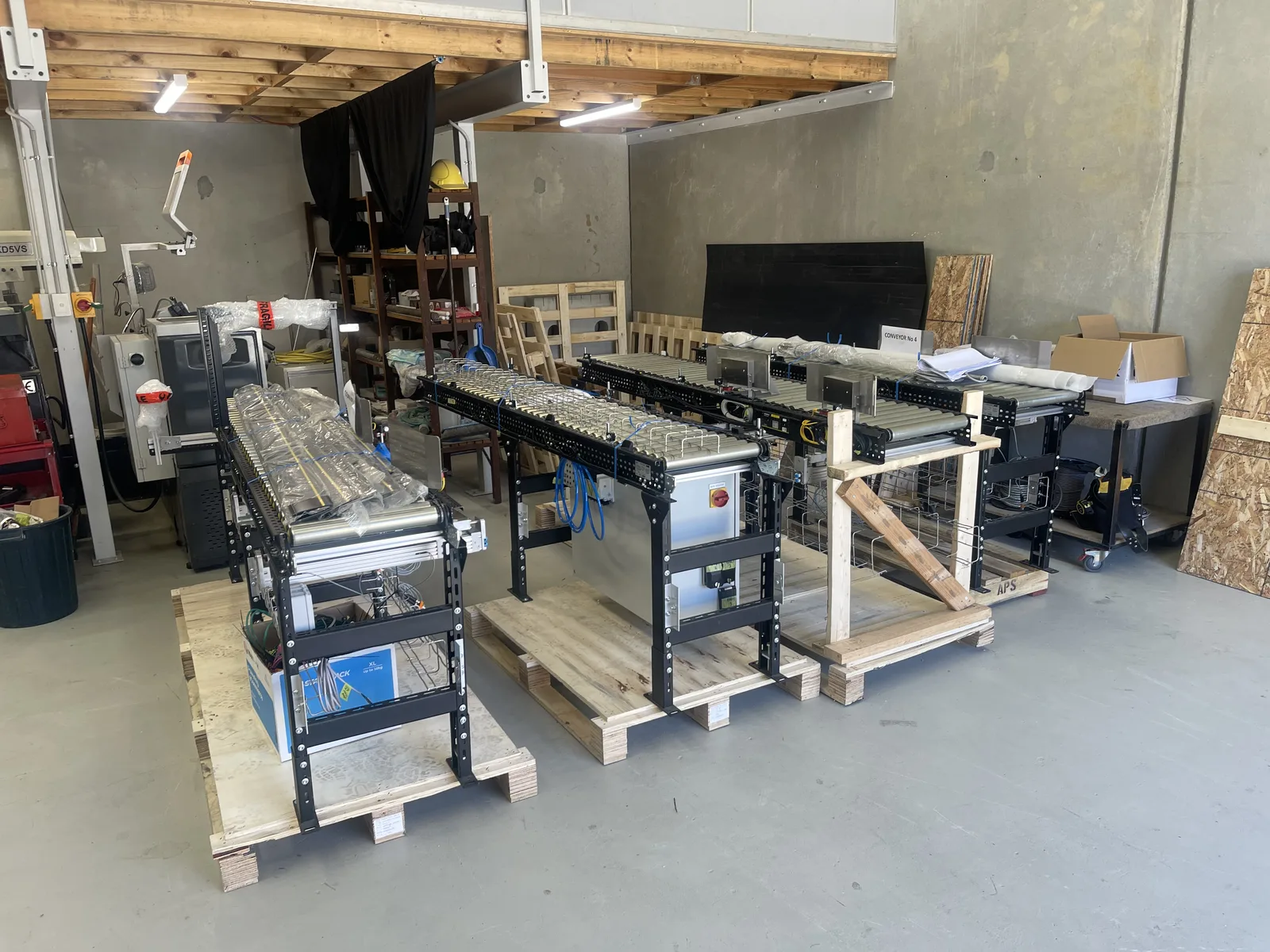
- Belt conveyors — flat, inclined, cleated and hygienic-design for food environments
- Roller conveyors — gravity, driven and zero-pressure accumulation
- Modular and slat belt — for product handling, transfers and curves
- Pallet conveyors — chain, roller and transfer cars for palletising and warehouse lines
- Case, carton and tray handling — including merges, diverts and lane balancing
Plus everything that goes with them: transfers, chutes, hoppers, pop-up stops, alignment guides, weigh sections, metal detection and checkweigher integration, and structural platforms and access.
What "one team" actually delivers
- Design — 3D CAD layout and simulation, structural design, drive and motor sizing, safety-distance planning
- Fabrication — frames, guarding, platforms and transfers built in our own workshop, in mild steel and stainless for food and washdown environments
- Mechanical install — rigging, positioning, levelling, drive fitting, belt tracking and commissioning
- Electrical — motor supplies, field wiring, switchboards, VSDs and motor control, all under our own licence
- Controls — PLC and HMI programming, line integration, SKU routing, speed and accumulation logic, SCADA reporting
- Safety — guarding, interlocks, pull-wire and e-stop systems designed and validated to AS/NZS 4024
- Support — preventative maintenance, spares, and mechanical breakdown support by arrangement
If the job needs more than a conveyor — a machine moved to make room for it, or a new frame designed from scratch — that's the same crew too. See machinery installation and relocation and mechanical design and engineering.
Proven on live production lines
a chocolate manufacturer, Melbourne — a full mechanical, electrical and controls reconfiguration of a production and packing line at a working chocolate factory. One contractor, minimal downtime.
a secure destruction operator — design, fabrication and installation of a complete automated infeed and outfeed system with extraction for a new hammer mill. Mechanical, electrical and controls from a single team.
Inex Extrusions — electrical installation of a new packing and stacking line, including machine supplies, relocatable operator stations and full power and data provisioning.
a manufacturer in Laverton North — a three-robot palletising cell with integrated conveyors, SKU reporting and safety scanners, designed, built and supported end to end.
Upgrades, extensions and breakdowns
Not every conveyor job is a new line. A lot of what we do is:
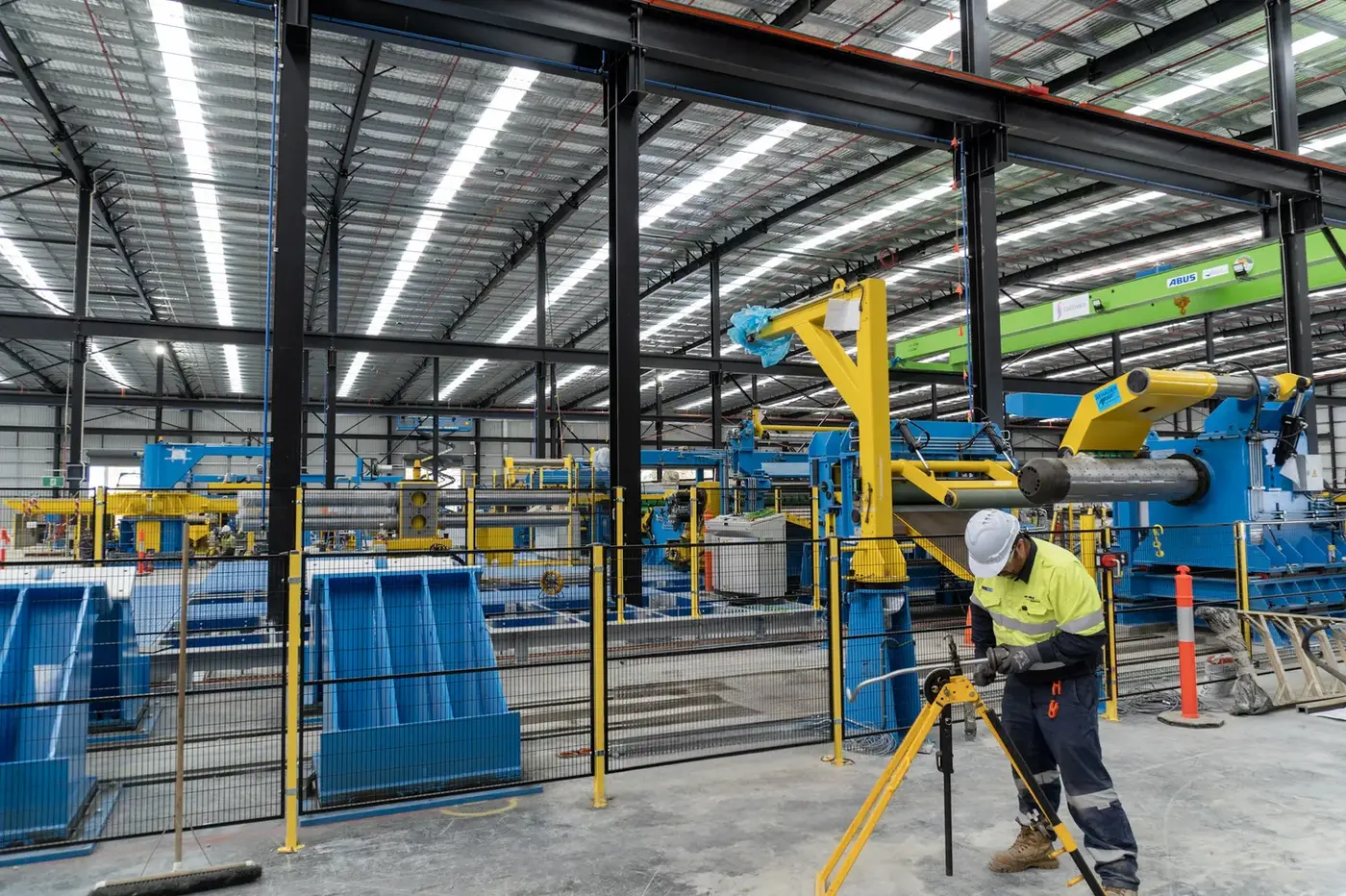
- Extending or rerouting an existing conveyor around a new machine or a changed floor plan
- Drive and control upgrades — replacing failed or obsolete drives, adding VSDs for soft starting and energy saving, replacing relay logic with a PLC
- Bringing older conveyors into safety compliance — guarding, nip-point protection, pull-wire systems and interlocks to AS/NZS 4024
- Breakdown response — belts, bearings, gearboxes, drive couplings and control faults, with electrical and mechanical capability in the same crew so nobody's waiting on a second contractor at 2am
Conveyors rarely stand alone. We also feed them into robotic palletising cells, and we install and connect the machines either side of them as part of machine installations. Most of this work lands in food and beverage and warehousing and logistics.
Frequently asked questions
Do you manufacture conveyors or just install other people's?
Both. We design and fabricate conveyors, frames, transfers and guarding in our own workshop, and we also install, wire, integrate and support OEM and imported conveyor equipment. If a supplier's system is the right answer we'll say so and integrate it properly.
Can you integrate a new conveyor into our existing line?
That's most of what we do. It means handshaking with your existing PLCs, matching speeds and accumulation logic, and often modifying the upstream or downstream equipment. Because we program the controls ourselves, integration isn't a separate scope with a separate contractor.
What about food-grade and washdown environments?
Yes — hygienic frame design, stainless construction where the application calls for it, IP-rated drives and enclosures, and layouts designed for cleaning access. Food and beverage is one of our largest sectors.
How long does a conveyor project take?
A straightforward extension or upgrade can be designed and installed inside a few weeks, often across a single shutdown weekend. A new line section with controls integration is typically 8–16 weeks depending on fabrication load and lead times on drives and components. We'll give you a programme with the quote.
Can you work in a shutdown window?
Yes, and we plan for it. Most conveyor installs and changeovers happen over a weekend or a planned shutdown. We pre-fabricate and pre-wire as much as possible off site so the on-site window is as short as it can be.
Do you handle the safety compliance?
Yes. Conveyors are one of the most common sources of guarding and nip-point findings in a machine safety audit. We design guarding, interlocks and pull-wire systems to AS/NZS 4024 and validate them as part of the handover.
Have more questions? Get in touch with our team and we'll be happy to help.