The problem with most risk assessments
Plenty of consultants will assess your machines. You'll get a register of hazards, a risk score against each one, and a list of recommendations written in the abstract: "provide fixed guarding", "interlock this access door", "upgrade the control system to an appropriate performance level".
Then the report lands on a maintenance manager's desk and nothing happens for eighteen months — because turning those recommendations into steel, sensors, wiring and validated safety logic means finding a fabricator, an electrician, an automation engineer and someone to sign off the result, and coordinating all four around a production schedule.
We do the assessment and all four of those things. That's the whole point of the way we're set up.
What the assessment covers
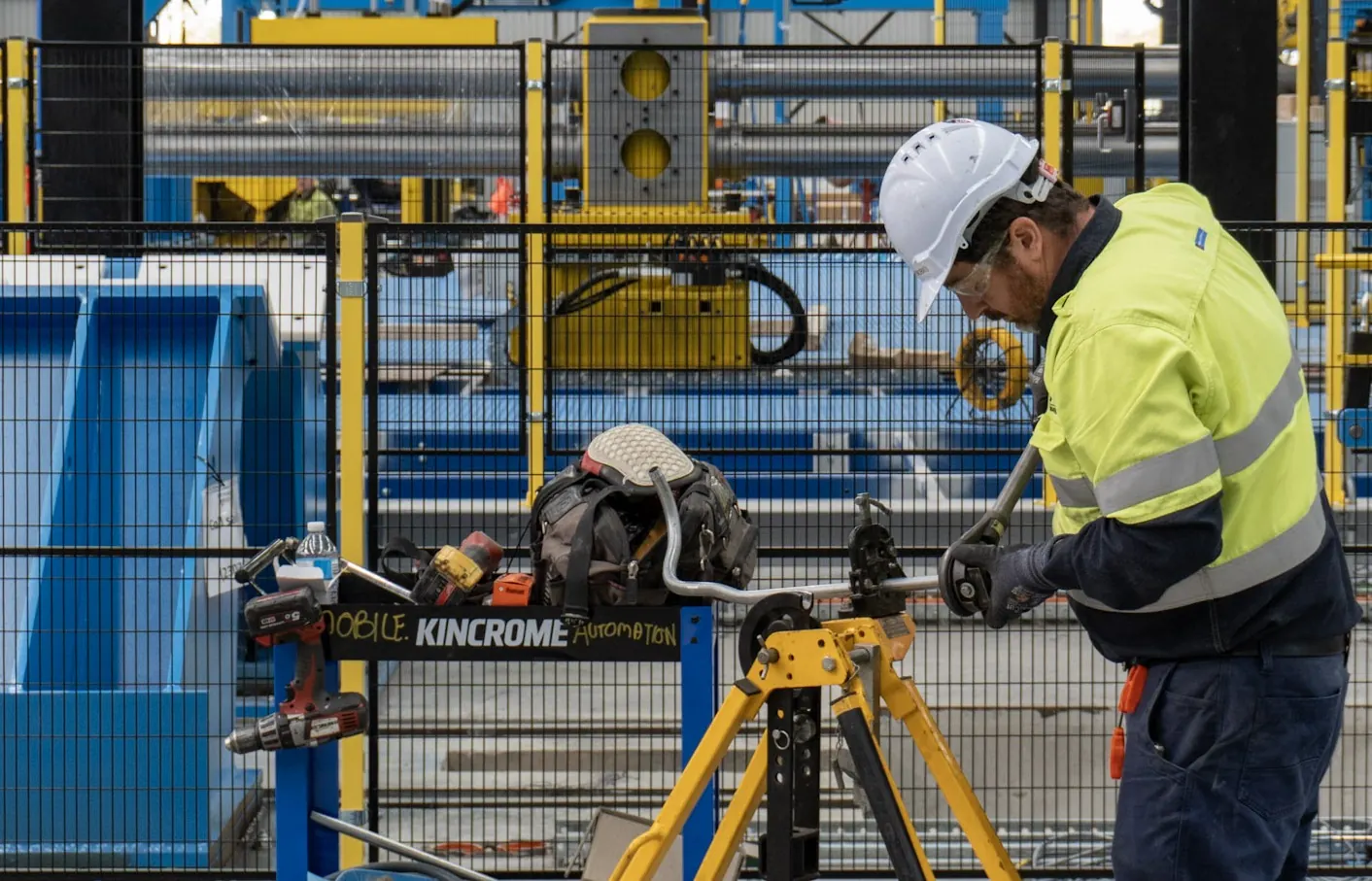
We assess machinery against AS/NZS 4024 Safety of Machinery, drawing on the risk assessment methodology of ISO 12100 and, where safety-related control functions are involved, the performance level requirements of AS/NZS 4024.1503 / ISO 13849.
For each machine:
- Hazard identification across the full lifecycle — normal operation, setup, changeover, cleaning, maintenance, fault clearing and decommissioning, not just the run state
- Risk estimation — severity, frequency of exposure and possibility of avoidance, scored consistently across the fleet so priorities are comparable
- Existing safeguard evaluation — guarding, interlocks, e-stops, light curtains, two-hand controls, and whether the safety control system actually achieves the performance level it needs to
- Safeguarding distance checks where guards, curtains or scanners rely on the machine stopping before someone reaches the hazard
- Practical fix definition — what would actually resolve each finding, with an indicative cost and downtime estimate
You get a register you can prioritise, budget and work through — and a partner who can execute it. Where a finding needs a safety function engineered and proven, we take it through to design and validation.
Built for legacy machines, not just new ones
New machinery arrives with a CE mark or a compliance declaration. The hard problem in Australian manufacturing is the twenty-year-old press, the modified line and the imported machine that never met local standards in the first place.
That's most of what we do. For a window manufacturer we ran a compliance programme across 30+ production presses and machines — motor conversions, earthing, protection and safer control stations — bringing the fleet into AS/NZS 3000 compliance. For a medical device manufacturer we designed and validated a safety PLC system to AS 4024 around an ethylene-oxide steriliser, a regulated medical process where the safety case had to hold up to scrutiny.
Old machines, real production pressure, verified outcomes. That's the work.
Assessment to installed, validated fix
Where a consultant stops at the report, we can keep going:
| Stage | What we do |
|---|---|
| Assess | Hazard identification, risk scoring, safeguard evaluation, safeguarding distance checks |
| Specify | Define the safety function — what it must do and to what performance level |
| Design | Guarding design in 3D CAD, safety circuit design, electrical schematics |
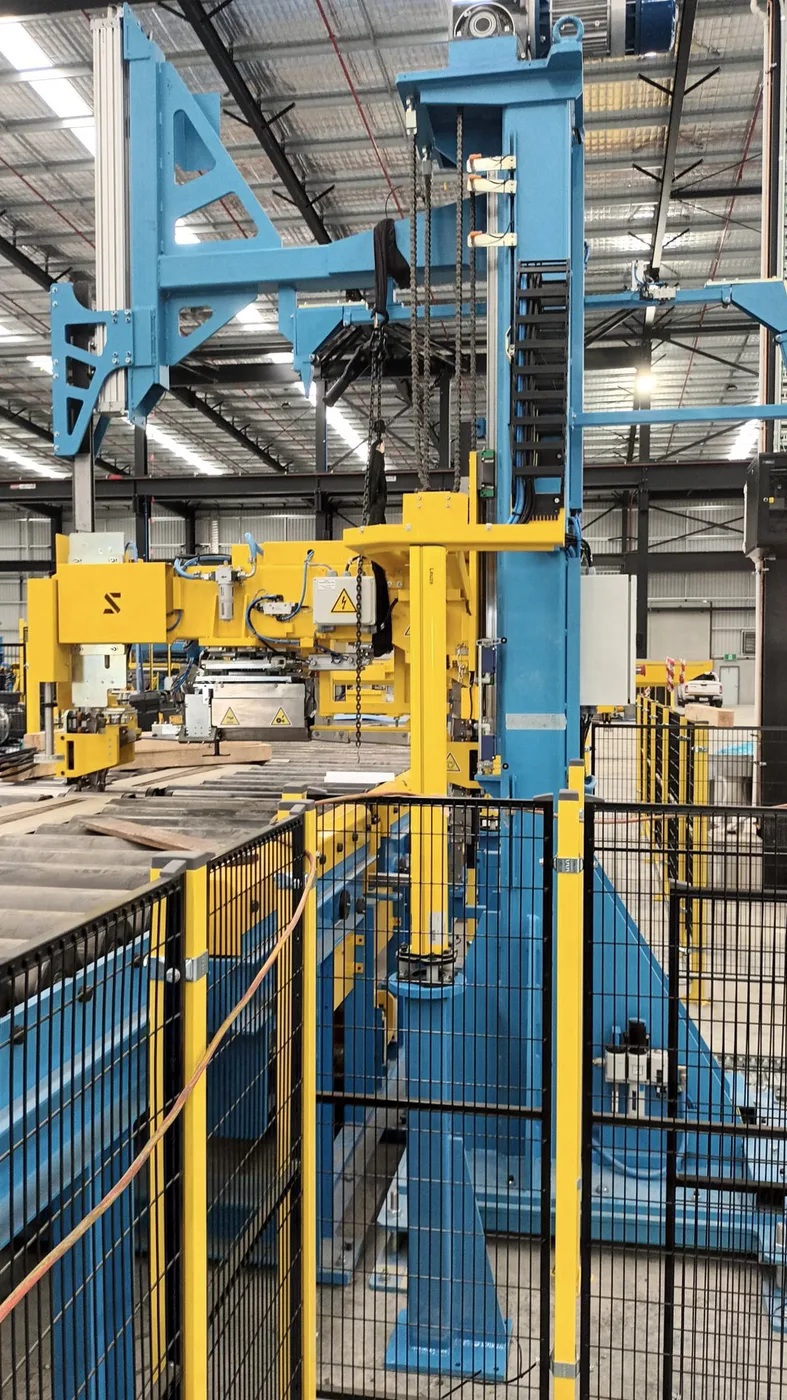
| Build | Guards, frames and access systems fabricated in-house by our mechanical team |
| Install | Guarding installed, safety devices wired and terminated by our own electricians (REC 8904) |
| Program | Safety PLC and safety relay logic — Siemens, Allen-Bradley, Omron, Pilz |
| Validate | Functional testing and documented sign-off |
| Document | Drawings, test records and a compliance file that survives an audit |
One quote. One team. One point of accountability when something needs to be re-cut on site.
Assessed by TÜV-certified engineers
Our machine safety work is led by engineers with TÜV functional safety certification, so the risk assessment, the performance level requirements it sets and the validation that follows are carried out to an internationally recognised competency standard. That matters when a regulator, an insurer or a customer's auditor asks who made the call and on what basis.
Working around production
Assessments happen while you're running. We schedule the intrusive parts — guard removal, safety function testing — into your existing shutdown windows or planned maintenance slots. For multi-machine programmes we phase the work so the line keeps producing while the fleet gets progressively compliant.
Related: machine safety systems · safety validation and requirement specifications · safety upgrades
Frequently asked questions
Is a machine risk assessment legally required in Victoria?
Victorian OHS legislation requires employers to identify hazards and eliminate or reduce risks associated with plant so far as is reasonably practicable. A documented risk assessment against AS/NZS 4024 is the standard way of demonstrating that has been done. It's the evidence, rather than the assessment itself, that regulators and insurers look for. For advice on your specific obligations, check with WorkSafe Victoria or your OHS adviser.
How long does an assessment take?
A single machine is typically half a day on site plus reporting. A fleet programme is scoped per machine — for a 30-machine site we'd usually work in phases over several weeks so findings can start being actioned before the whole fleet is done.
Do we have to use you for the remediation work?
No. The register and recommendations are yours to take to whoever you like. Most customers use us because the assessment already contains our costings and we can start without a fresh scoping exercise — but there's no obligation.
What happens once we have the risk assessment?
You get a prioritised register of findings, each with a recommended control and an indicative cost. From there we can design and install the safeguarding, engineer the safety function to the required performance level, and validate that it performs as intended. The register is yours — you can also work through it with another contractor.
Can you assess machines we're about to buy or import?
Yes, and it's much cheaper than assessing them after installation. We review OEM documentation and safety declarations against Australian requirements before the machine ships, so gaps get resolved by the supplier rather than by you.
How do you handle safeguarding distances and stop time?
Safeguarding distances for light curtains, scanners and interlocked gates depend on how long the machine actually takes to stop, which is often longer than the original design assumed once wear and modifications are factored in. We calculate the required distance from the machine's recorded stopping performance and check it against where each device is mounted. Where that figure can no longer be relied on, we flag that the overall stopping performance needs to be measured on the machine before the safeguarding distance is treated as verified.
Have more questions? Get in touch with our team and we'll be happy to help.